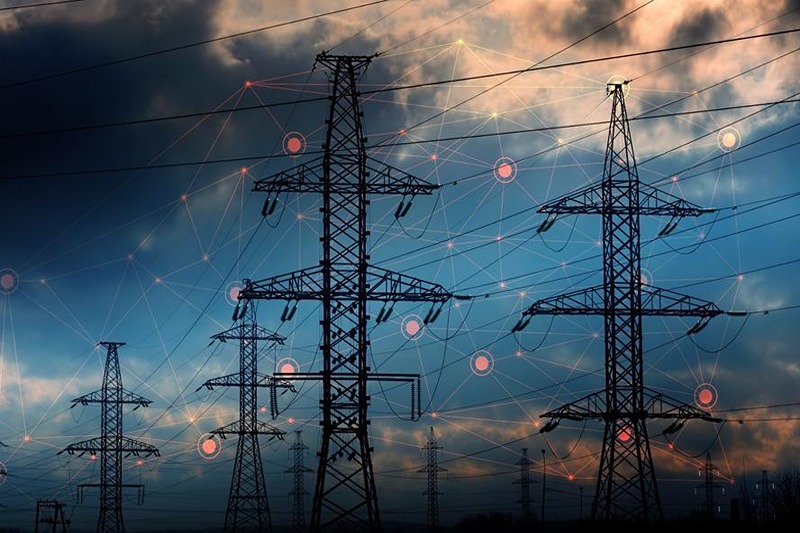
DUBAI — The critical infrastructure keeping the world’s power flowing and water running faces an escalating threat as automated cyberattacks increasingly target the software-driven backbones of daily life, transforming technical vulnerabilities into severe geopolitical and operational risks.
While global investment in infrastructure defense has surged, many utilities remain highly exposed. The vulnerability stems not from a lack of awareness, but from a fundamental mismatch between traditional corporate cybersecurity strategies and the physical reality of the industrial plant floor.
“Cybersecurity is no longer something layered on after the fact, it is becoming part of how these systems are designed and managed,” said Liam Hurley, President for the Middle East and Africa at industrial automation giant Emerson, in an industry analysis. Yet, despite the technical evolution, structural gaps within organisations continue to multiply the danger.
For decades, operational technology (OT), the physical valves, pumps, and generators that control infrastructure, relied on being disconnected from the internet. Today, the push for efficiency and data-driven automation has tethered these systems to corporate networks, creating a vast and poorly mapped attack surface.
A primary failure point sits at the executive level. In many utilities, cybersecurity responsibilities are still thrust upon engineering teams juggling daily operations, leaving protection fragmented across different facilities.
“When cybersecurity sits outside the boardroom, it stays incomplete,” Hurley warned. “The organizations that get this right have made one fundamental shift,they stopped asking engineering teams to own a business risk and brought it upstairs.”
Compounding the executive gap is a pervasive lack of visibility. Driven by rapid digitization and legacy systems operating past their lifespans, many water and wastewater utilities lack a complete, real-time inventory of their connected hardware. These blind spots frequently occur at the intersection of corporate Information Technology (IT) and industrial Operational Technology (OT), the exact boundaries digital adversaries exploit to breach physical networks.
Furthermore, traditional IT security mindsets focused on data encryption and password policies frequently fail when applied to heavy machinery. Experts argue that modern infrastructure defense must rely on physical engineering rather than just digital firewalls, designing systems capable of absorbing a digital breach without catastrophic failure.
Implementing mechanical fail-safes, physical delays, and operational constraints can prevent a rogue command from triggering equipment damage or toxic water contamination, shifting the goal from absolute prevention to built-in resilience.
However, technology alone remains insufficient without organizational alignment. Industrial environments rely on a complex web of internal engineers, IT personnel, third-party vendors, and public regulatory bodies, all operating with vastly different risk tolerances. Lean OT teams are increasingly overwhelmed by the expanding mandate of threat monitoring alongside their core duties of safety and uptime.
To sustain defenses, experts suggest utilities move away from short-term security software installations and toward long-term lifecycle partnerships with automation providers to consistently stress-test systems.
“The goal is not to shift responsibility, but to extend capability,” Hurley noted. “Ensuring that cybersecurity is not a one-time effort, but a sustained and manageable part of operations.”